

A reflection on World Prematurity Day

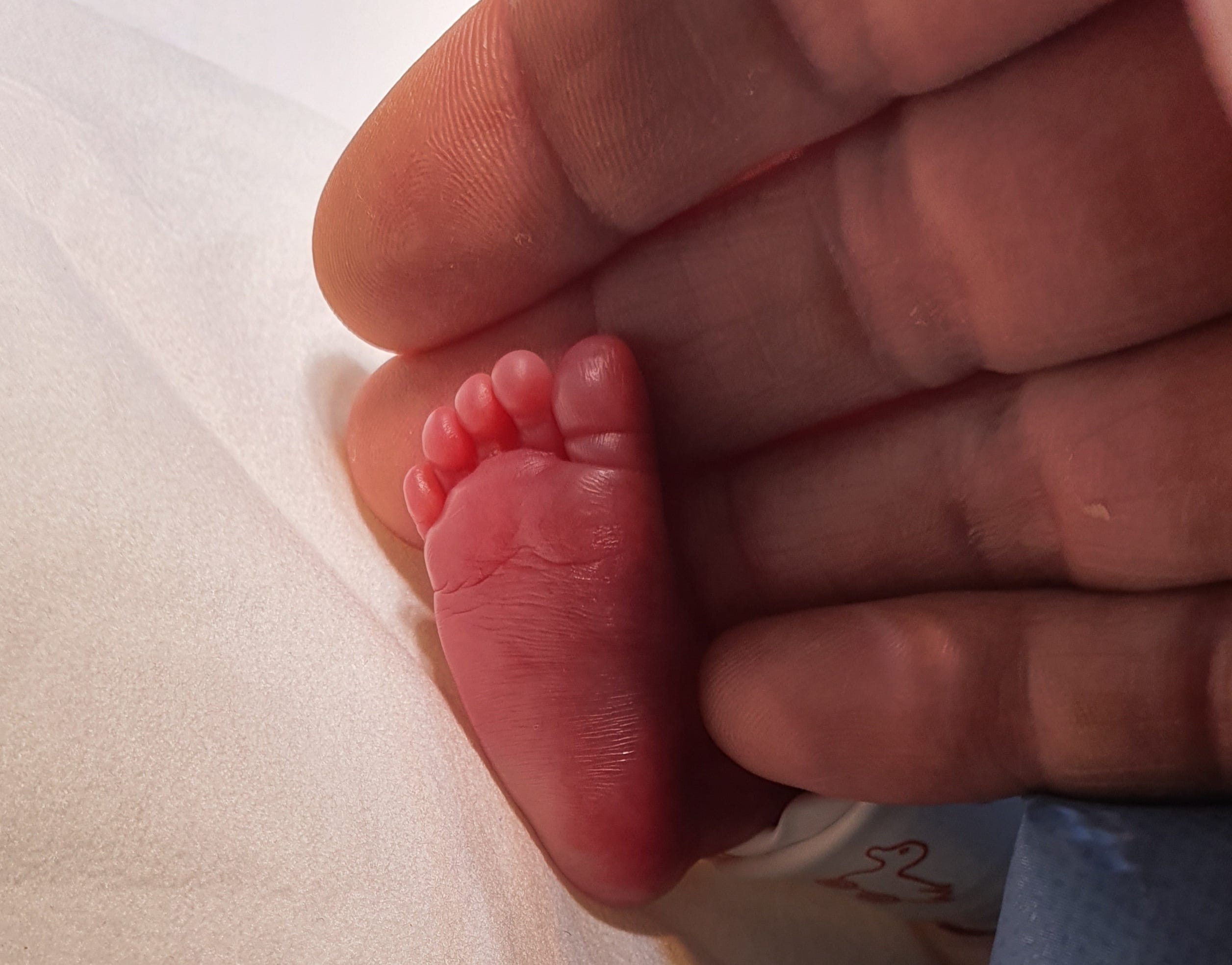
Every year on 17 November, we take time to reflect, raise awareness, and honour the fragile lives that began too soon. World Prematurity Day reminds us that prematurity is not just a statistic. It is a story of resilience, of families facing the unexpected, of tiny fighters and their brave parents.
The Irish scene: what the numbers tell us
In Ireland, the situation is both sobering and inspiring. The INFANT Research Centre reports that about 4,500 babies are born prematurely each year in Ireland, which is roughly one in every 16 babies. Globally, about one in ten babies is born preterm. While numbers alone cannot tell the whole story, they help us understand the scale. Thousands of families. Thousands of hopes and fears. Thousands of nights spent pacing corridors, waiting for a call. Thousands of first breaths, first kangaroo-holds, and hard-earned milestones.
Why this matters to me
As a neonatologist, I have witnessed the intensity of those first seconds and minutes. The sound of machines, the quiet in the corridor as the team gathers, and the anxious look from a mother across the incubator door are all familiar. As a researcher, I know there is still much we do not fully understand about prematurity: why it happens, how to improve long-term outcomes, and how to support entire families. As a podcaster and digital artist, I believe in sharing these human stories to help build our collective awareness.
But beyond all roles, I am humbled. Watching a baby born so early fight for life shows both the fragility of human beginnings and the strength of hope. Seeing parents advocate at every step—questioning, learning, and keeping watch, reminds me that resilience is not just an idea but something lived every day.he true heart of the story.
For every preterm baby, there is a parent whose world changes in an instant. The expected due date fades away, replaced by monitors, alarms, clinic visits, and uncertain milestones. Still, the parent continues. They learn to understand medical terms, support skin-to-skin time, and sometimes become a source of hope.
These parents deserve more than acknowledgement; they deserve action. They deserve neonatal units designed for family-centred care. They deserve follow-up services that monitor not just survival but thriving. They deserve a community where no one says “you’re alone in this”.
Looking ahead: what we must keep pushing
We cannot celebrate survival without confronting the gaps. If we want Ireland to lead in neonatal care the way families deserve, we need to act.
Prevention and prediction: Stronger antenatal risk assessment. Better prediction tools for preterm birth. Earlier, smarter intervention instead of reactive care.
Family-centred neonatal care: Skin-to-skin as default. Parents treated as partners, not visitors. Psychological support that actually exists outside a brochure.
Huge investment in NICU infrastructure: This is the piece we can’t dodge anymore. Too many units across Ireland operate in cramped, outdated spaces that simply cannot deliver optimal modern neonatal care. We need bigger footprints, private family spaces, proper isolation rooms, breastfeeding and pumping facilities that are not afterthoughts, and a design that supports neurodevelopment rather than fighting against it. You cannot build twenty-first-century care on twentieth-century infrastructure. The babies and their parents deserve more.
Research and long-term follow-up: Survival is the starting line. We need robust follow-up programmes tracking development, heart health, learning, and long-term wellbeing. Research should not be a luxury; it should be built into the system.
Awareness and advocacy: Buildings turning purple once a year is fine, but policy needs to turn purple as well. Consistent funding, public visibility, and national strategy are the only ways this becomes more than a social media moment.
On a personal note
Every time I walk into a neonatal unit, I feel both the weight of responsibility and the privilege of being part of these stories. I think of the tiny bodies still developing, the parents pacing outside the incubator, and the moment a baby reaches out for a human touch despite all the wires and tubes.
And I think: We are not doing this alone. The strength of the infant, the grit of the parent, the devotion of the neonatal team; they all converge. If I learned anything, it is this: resilience grows in the soil of struggle, hope blooms in the incubator’s glow, and community matters more than we often admit.
So today, I invite you, whether you are a parent, clinician, researcher, friend, or simply someone who cares: to pause. Remember the babies born too soon. Honour the families who loved them fiercely. Take one small action: share a story, support a neonatal unit, or speak up.
On 17 November, we mark World Prematurity Day. But for many families, the journey lasts for years. Let our awareness support them far beyond just one day.